

Land Clearing Services: When to Hire an Excavation Contractor in Delaware
Land doesn’t clear itself. Anyone who’s stood at the edge of an overgrown lot, staring down a tangle of trees, stumps, and brush, knows exactly how overwhelming that first step can feel. The good news? You don’t have to figure it out alone.
Land clearing touches nearly every type of property project. Building a new home requires a cleared, graded lot first. Commercial expansions follow the same logic. Even agricultural landowners deal with encroaching tree lines that quietly eat up usable acreage year after year.
A lot of property owners either wait too long to call a contractor, or try to DIY a job that requires heavy equipment and licensed operators. Renting a chainsaw and spending three weekends in the woods isn’t professional land clearing. This guide breaks down exactly when hiring an excavation contractor makes sense, what the process looks like from start to finish, and what Delaware property owners specifically need to know before getting started.
What Does Land Clearing Actually Involve?
Here’s where many homeowners get tripped up. Land clearing and brush removal are not the same thing, not even close. Pulling out overgrown shrubs along a fence line might be a weekend project. Clearing a wooded half-acre lot for a new home is a different challenge entirely, and treating it like the former is one of the most common, and costly, mistakes property owners make.
More Than Just Tree Removal
Professional land clearing involves a combination of services working together to take a site from raw, vegetated land to a buildable surface. Tree removal is the obvious starting point, but stump removal is its own separate process, and this matters when getting quotes. Many contractors will clear trees but leave stumps, which creates a real problem if you’re trying to grade and build. True land clearing means taking it all the way down to the roots.
What Is Grubbing, and Why Does It Matter?
Grubbing refers to the removal of roots, buried debris, and organic material below the surface. It’s unglamorous work, but it’s essential. Organic material left underground decomposes over time and creates settling issues that can compromise a foundation or driveway years later. A contractor who does proper grubbing is setting the next phase of your project up for success.
The Equipment Behind the Work
The machinery involved in land clearing is part of what separates professional work from DIY attempts. Bulldozers push large amounts of material efficiently across open terrain. Skid steers maneuver in tighter spaces, invaluable on smaller residential lots. Excavators handle heavy root systems with ease. Forestry mulchers can process trees, brush, and stumps in a single pass, turning them into mulch on site rather than hauling debris away. Each machine has its place depending on the project’s scale, terrain, and goals.
Don’t Forget Debris Disposal
Once trees, stumps, and brush are cleared, something has to happen with all of it. Options include chipping and mulching on site, hauling material to a disposal facility, burning where local regulations permit, or leaving wood for the owner’s use. Each option affects cost and timeline, and it’s worth having that conversation before any equipment hits the ground.

Signs It’s Time to Call a Land Clearing Contractor
There’s a version of this question that’s easy to answer: if you need a bulldozer to do it, call a professional. In practice, the line between a manageable DIY project and one that requires a licensed contractor isn’t always obvious, until you’re in the middle of it.

Tree Size Is the First Indicator
Trees with a trunk diameter greater than six inches require equipment to safely remove. Taking down a mature oak or pine without proper machinery is genuinely dangerous, for the person doing it, for nearby structures, and for utility lines that may not be immediately visible. Professional contractors assess each tree before touching it: the lean, the surrounding obstacles, the root system. That assessment takes experience to do correctly.
When Stumps, Slopes, or Utilities Are Involved
Full stump removal, especially for trees with extensive root systems, requires excavation equipment, not just a grinder. If the plan involves building over the area, grinding alone isn’t enough. The roots need to come out, and a contractor has the tools to do that cleanly without disturbing more surrounding soil than necessary.
Uneven terrain, slopes, and drainage considerations are strong signals that professional site work is needed. Grading done wrong creates drainage problems that cause flooding, erosion, and structural damage. Done right, it sets the entire project up to perform well long-term.
Proximity to utility lines, drainage areas, property boundaries, or existing structures is a hard stop for DIY work. In Delaware, property owners and contractors are required to contact Miss Utility (811) at least three business days before any ground-disturbing work. A homeowner doing their own clearing may not know this call is required until something goes wrong, and hitting a buried gas or electric line is not a lesson anyone should have to learn firsthand.
What About Timeline and Permits?
A professional crew with the right equipment can clear a half-acre lot in one to two days. A homeowner with rented equipment might spend a month on the same project, or more. If a construction timeline is attached to the clearing, delays cost real money.
In Delaware, land disturbance exceeding 5,000 square feet, roughly a tenth of an acre, typically triggers sediment and stormwater permitting requirements through DNREC. A contractor who operates regularly in the state knows this threshold, knows what documentation is required, and has navigated the process before. That familiarity alone can save weeks off a project timeline.
What Projects Require Professional Land Clearing?
Land clearing shows up in more project types than most people initially realize. Understanding the range helps property owners plan earlier in the process, rather than discovering the need after a build timeline is already locked in.
Residential lot clearing for new home construction is the most comprehensive scope: trees, stumps, roots, and rough grading all in one engagement. The building contractor’s timeline depends on this work being done right and on schedule.
Outbuildings, pole barns, detached garages, workshops, still require a properly prepared site pad. The site needs to be level, well-drained, and free of organic material that will decompose under the structure. A solid pad is what keeps the floor from settling unevenly five years down the road.
Agricultural land reclamation is an underappreciated use case, particularly in Delaware’s rural counties. Fields that were actively farmed can become nearly impenetrable within 10 to 15 years of going fallow. Landowners looking to restore productive acreage for farming, grazing, or hay production need professional clearing and sometimes light grading to bring that land back into use.
Driveway and access road clearing is deceptively important. Cutting a path through trees and laying gravel on uncleared soil is a recipe for a road that washes out within a few seasons. The clearing and grading phase is where a long-lasting driveway is actually built.
Commercial site preparation is the most time-sensitive category. Any delay in site clearing can have downstream consequences for the entire construction schedule. Stormwater and drainage projects also frequently require clearing work, and this type of project intersects directly with DNREC regulations.
The Land Clearing Process, What to Expect
Understanding what the process looks like from start to finish helps you ask better questions, evaluate proposals more accurately, and avoid getting caught off guard mid-project, because something usually comes up.

Step 1: The Site Walk
A reputable contractor won’t quote a land clearing project without walking the property in person. They’re assessing tree density and size, slope, soil conditions, equipment access, proximity to structures and property lines, and potential complications like buried debris or drainage issues. Any contractor who quotes from a satellite image alone is cutting corners that will likely show up in the quality of the work.
Step 2: Utility Locates and Equipment Mobilization
Before a single tree falls, utility locates need to happen. Delaware contractors are required to contact Miss Utility (811) at least three business days before any ground-disturbing work begins. Underground utilities get marked so equipment operators know where not to dig. This isn’t optional, and it’s not something to skip to save time.
Equipment mobilization follows. The contractor determines access points, protects areas that need to stay undisturbed, and lays out the sequence of work. Efficient contractors think through this logistics phase carefully because the order in which things get done affects both safety and cost.
Step 3: Tree Felling, Stump Grubbing, and Debris Management
Depending on the equipment being used, tree felling and brush removal can move surprisingly fast. A forestry mulcher can process small-to-medium trees and brush in a single pass, eliminating the need for separate debris hauling. Larger trees may be felled first and then processed into logs, chips, or debris piles depending on the disposal plan.
Stump grubbing is where the stumps and root systems are extracted from the ground, leaving a site truly ready for the next phase. Grinding stumps down a few inches below grade might look fine, but it leaves decomposable organic material underground that will cause settling problems later. This is often where the difference between a thorough contractor and a cut-rate one becomes visible.
Step 4: Rough Grading and Erosion Control
Rough grading after clearing establishes the basic elevation and slope of the site, knocking down high spots and filling low areas to create a working surface. Erosion control follows, silt fencing, straw blankets, and temporary seeding protect freshly disturbed soil. DNREC requires erosion and sediment controls on most permitted projects, but a responsible contractor installs them anyway, even on smaller jobs.
How to Choose the Right Land Clearing Contractor in Delaware
Hiring a contractor is a decision where a little homework upfront saves a lot of headaches later. The range in quality, professionalism, and accountability among Delaware contractors is wider than most homeowners expect until they’ve been through the process once.
What to Verify Before Signing Anything
Start with insurance, it’s non-negotiable. A land clearing contractor needs general liability insurance and workers’ compensation coverage. General liability protects you if equipment causes damage to structures or neighboring properties. Workers’ comp protects the contractor’s employees, and without it, an injured worker on your property can potentially become your financial liability. Ask for certificates of insurance before signing anything.
Equipment matters more than most people realize. A contractor who owns and operates the right machines for the job will do better work, faster, than someone making do with equipment not suited for the terrain. Ask what equipment they plan to bring for your specific job, and why. An experienced contractor will have a clear, confident answer.
Get itemized quotes, not lump sums. A quote that just says “lot clearing, $X” tells you almost nothing about what’s included. An itemized proposal breaks out tree removal, stump grubbing, debris disposal, rough grading, and erosion control as separate line items. This lets you compare proposals on an apples-to-apples basis and protects against scope creep once work is underway.
Ask specifically about debris handling and disposal, it’s one of the most common sources of misunderstanding. Will the material be hauled away? Chipped on site? Left in piles? If hauling is involved, is there a disposal fee? Get the answer in writing before work starts.
Green Flags vs. Red Flags
Local reputation carries real weight in smaller Delaware markets. Check Google reviews and look for patterns in the feedback: responsiveness, professionalism, and clear communication throughout the project are themes that show up consistently in reviews of contractors worth hiring.

Navigating Delaware’s Land Clearing Regulations
Regulatory compliance is one of the areas where working with a Delaware-based contractor pays for itself many times over. Delaware has a specific framework governing land disturbance, erosion control, and stormwater management, and violations can result in stop-work orders, fines, and mandatory restoration work that costs more than the original project.
When Does a Permit Kick In?
The central framework falls under Delaware’s Sediment and Stormwater Program, administered by the Department of Natural Resources and Environmental Control (DNREC). Any land disturbance affecting 5,000 square feet or more, roughly a tenth of an acre, requires a permit. Many residential clearing projects will hit this threshold quickly.
The permit process requires submission of an Erosion and Sediment Control Plan (E&SCP) and, for larger projects, a Stormwater Management Plan. These documents outline how runoff will be managed, what erosion controls will be installed, and how the site will be stabilized after grading. DNREC reviews these plans before issuing permits, and approved plans must be followed throughout the project.
Wetlands in Delaware, Know Before You Clear
Wetlands are an especially significant consideration in Delaware, particularly in Sussex County where coastal plain geography means wetland areas are common and not always immediately obvious. Delaware maintains some of the strongest wetlands protection regulations in the mid-Atlantic region.
Any land clearing adjacent to a regulated wetland, or within a wetland buffer zone, requires additional review and potentially a separate permit from DNREC’s Wetlands and Subaqueous Lands Section. Buffer requirements around tidal wetlands can extend 100 feet or more from the wetland boundary. Getting this wrong isn’t just expensive, it can result in mandatory mitigation that costs more than the original project.
County-Level Oversight
Local county and municipal planning offices add another layer of oversight. New Castle County has its own land use ordinances and may require additional permits for clearing activities in designated overlay districts. Sussex County’s planning department has been increasingly active in enforcing land use requirements. Checking with the local planning office before beginning a project is a step that experienced contractors treat as standard practice.
If a contractor tells you no permits are needed for a project that clearly exceeds 5,000 square feet of disturbance, that’s a warning sign worth taking seriously. The permit process exists for good reasons, and skipping it creates legal exposure that falls on the property owner, not the contractor.
Why Local Experience Matters for Delaware Land Clearing
There’s a version of hiring a contractor where a company based four states away wins the bid because the price looks good on paper, and shows up without any real familiarity with Delaware’s terrain, regulations, or seasonal conditions. It happens more than people think. And it rarely ends well.
Soil Conditions, Seasonal Timing, and Local Instinct
Delaware is geographically compact, but its soil conditions vary more than outsiders often expect. The sandy, loamy soils of coastal Sussex County behave very differently under heavy equipment than the clay-heavy soils found in parts of New Castle County. A contractor who has worked extensively across all three Delaware counties develops an intuition for how soil will respond to disturbance, how drainage will behave after grading, and where the potential problem spots are.
Seasonal soil conditions matter enormously. Spring thaw periods and heavy rainfall can make certain soil types nearly impassable for heavy equipment, or create conditions where working the land causes compaction that’s expensive to fix. An experienced local contractor knows when to push forward and when to wait a few days for conditions to improve.
Relationships, Accountability, and Reputation
Relationships with local permitting authorities are an undervalued benefit of working with an established local contractor. A contractor who has worked with DNREC staff on multiple projects and knows county planning reviewers will navigate the approval process faster than an out-of-state company encountering Delaware’s system for the first time. In a permitting environment where review times can stretch to weeks, that familiarity has real monetary value.
Accountability is arguably the most practical argument for local hiring. When a contractor’s business, equipment, and reputation are all rooted in the same community as the project, there’s a meaningful incentive to do good work, and to address problems if they arise. A company operating from another state may simply be gone if something surfaces weeks after the project closes.
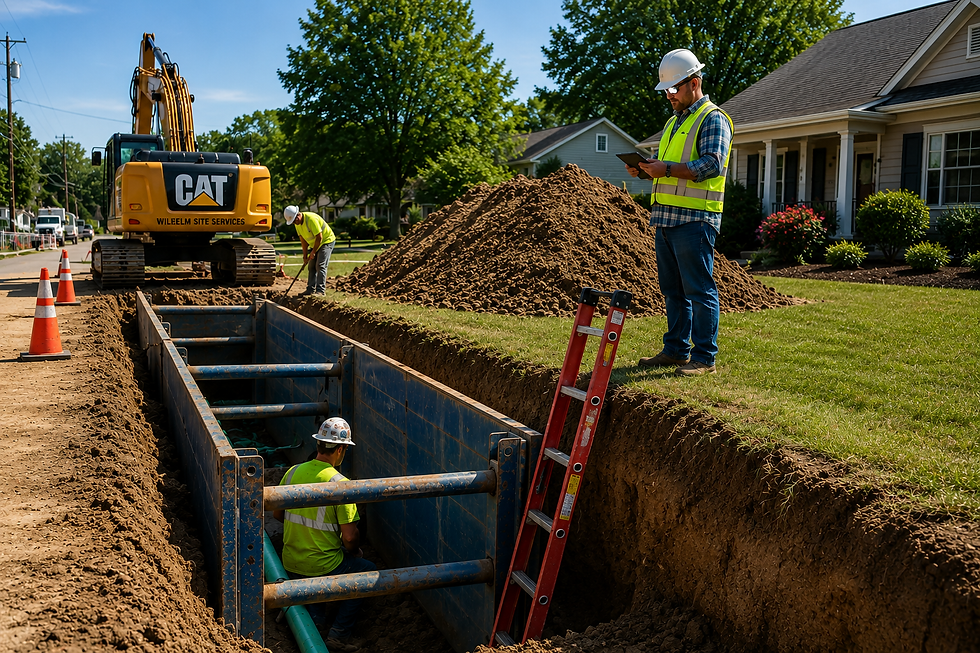
Wilhelm Site Services is a family-owned operation rooted in Delaware, serving residential and commercial property owners across Sussex, Kent, and New Castle Counties. Jacob and Peter Wilhelm bring over 15 years of combined industry experience to every project, with a track record built on showing up on time, communicating throughout the process, and taking pride in work that holds up.
The Bottom Line
Land clearing isn’t the glamorous part of a property project. It happens before the exciting stuff, and it’s easy to underestimate what it takes to do it right. But the foundation of any successful build, farm expansion, or site development starts with the ground beneath it.
The decision to hire an excavation contractor usually comes down to scale, complexity, and timeline. Trees over six inches in diameter, stumps requiring full removal, sloped terrain, proximity to utilities or wetlands, projects requiring permits, any one of these factors is a strong signal that professional expertise is needed. Waiting to figure that out mid-project costs more than getting it right from the start.
The smartest move, whether the project is a simple residential lot or a multi-acre commercial site, is partnering with a contractor who knows the land, understands local regulations, and has a reputation worth protecting. Do the homework, ask the right questions, insist on a site visit, and get everything in writing.
Ready to get started? Reach out to a qualified Delaware excavation contractor, walk the property together, and get a clear picture of the scope before making any commitments. The right contractor will welcome that conversation, and that’s usually a good sign in itself.


Comments